You don’t need to spend a fortune to sound like a pro. That idea still catches a lot of DJs off guard. The assumption that expensive software equals better performance is one of the biggest myths in the game right now. The truth? Some of the most powerful tools for building crates, managing libraries, and prepping for gigs come at a fraction of the price people expect. Whether you’re a weekend warrior, a mobile entertainer, or a working pro watching your margins, affordable DJ software solutions have never been more capable or more relevant than they are in 2026.
Table of Contents
- What does affordable DJ software actually mean?
- Essential features to look for in affordable DJ software
- Comparison of top affordable DJ software solutions
- How to get the most value out of affordable DJ software
- Why affordable DJ software is the future of performance
- Explore the best affordable DJ solutions with Crate Hackers
- Frequently asked questions
Key Takeaways
| Point | Details |
|---|---|
| Affordable doesn’t mean basic | DJ software at lower price points provides key professional features for all users. |
| Essential features matter | Prioritize library management, beatmatching, and playlist creation when choosing affordable software. |
| Comparisons are crucial | Reviewing side-by-side option tables helps match your DJ style and needs with the right software. |
| Maximize value | Use tried-and-true strategies, add-ons, and backups to stretch the value of any affordable DJ platform. |
What does affordable DJ software actually mean?
Let’s cut through the noise. “Affordable” doesn’t mean cheap. It doesn’t mean stripped-down, buggy, or embarrassing to use at a real gig. It means you’re getting solid performance without paying for a bunch of features you’ll never touch.
In practical terms, affordable DJ software typically falls in the $0 to $20 per month range, or a one-time purchase under $100. Some tools offer free tiers with meaningful functionality. Others sit in a mid-tier price bracket around $10 to $15 monthly, offering nearly everything a professional needs.
Here’s what you should expect from any software in this range, no matter the price point:
- Cue points and hot cues: Essential for live mixing and avoiding awkward silences
- BPM detection and beatmatching: Automated or manual, this is non-negotiable
- Basic effects: Filters, reverbs, delays for transitions
- Library management: Sorting, searching, tagging tracks fast
- Playlist and crate building: Organizing your music by mood, genre, or event type
- Hardware controller support: Compatibility with common DJ controllers
What often gets left out at the lower price points? Advanced stems separation, full multi-deck mixing, or deep hardware integration with high-end equipment. Those are real trade-offs. But for the majority of gigs, you won’t miss them.
The bigger misconception is that price signals quality. It doesn’t. It signals marketing spend. Some of the best-reviewed and most-used tools in DJ booths worldwide are not the most expensive ones on the market.
| Price tier | Monthly cost | Typical features |
|---|---|---|
| Free tier | $0 | Basic mixing, 2 decks, limited library tools |
| Entry level | $5 to $10 | Cue points, BPM sync, basic FX, controller support |
| Mid tier | $10 to $20 | Full library management, smart crates, streaming |
| One-time purchase | Under $100 | Full feature set, no subscription |
Pro Tip: Before you judge software by price, list the three features you actually use every gig. If an affordable option covers all three, that’s your lane.
Essential features to look for in affordable DJ software
Understanding what “affordable” means helps, but knowing which features matter most is essential for choosing the right tool.
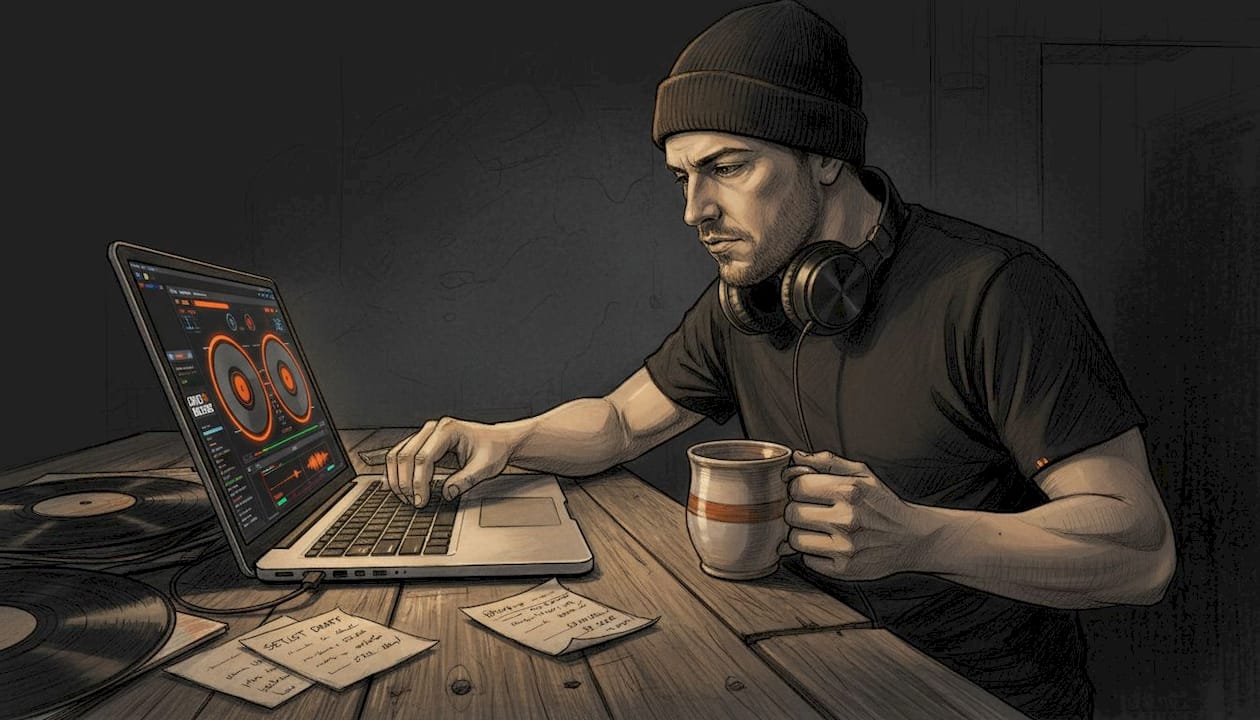
Organizing music libraries is a critical need that often gets ignored until something goes wrong. You’re mid-set, the crowd is vibing, and you can’t find the track you need because your library is a mess. That panic is preventable.
Here are the non-negotiable features to evaluate in any DJ software before you commit:
-
Library organization and smart crates. Can you tag tracks, build smart playlists, and find a song in under five seconds? If the answer is no, move on. Your library is your foundation. Everything else sits on top of it.
-
Beatmatching and sync functionality. Automatic sync is controversial among purists, but it saves mental bandwidth during complex sets. Look for software that offers both manual and automatic options so you can choose based on the gig.
-
Playlist building and gig preparation tools. Can you build different setlists for a corporate event versus a club night? Good software lets you prep multiple crates in advance without rebuilding from scratch every time.
-
File format compatibility. Your software needs to play nice with MP3, WAV, AIFF, FLAC, and AAC at minimum. If it can’t handle your existing library, it’s already failing before you open it.
-
Hardware controller support. Most modern affordable software supports popular controllers. But “most” is not “all.” Always verify that your specific controller model is on the official compatibility list before buying.
-
Streaming integration. In 2026, the ability to pull tracks directly from Spotify, Apple Music, or Tidal mid-set is a legitimate gig tool. Look for software that integrates streaming without making it complicated.
-
Export and sync capability. Can you export your crates to your DJ software of choice? This matters if you’re building your library in one tool and performing in another. Seamless exporting saves hours of manual work.
-
Stability and performance. Glitchy software at 1am in front of 300 people is not a vibe. Check user reviews specifically for crash reports and performance issues on your operating system.
Pro Tip: Download the free trial or lite version of any software before you buy. Run it through a full mock set at home. Test library loading, cue response, and what happens when you switch tracks fast. The trial tells you everything the marketing page won’t.
Comparison of top affordable DJ software solutions
Now that you know what features to expect, see how leading affordable solutions compare on what matters most for DJs.
Software for music event preparation needs to work in the real world, not just in demos. Here’s a practical look at how different categories of affordable tools stack up in 2026.
| Software type | Best for | Key strength | Notable limitation | Approx. cost |
|---|---|---|---|---|
| Library and crate manager | All DJ levels | Fast organization, duplicate removal, smart crates | Not a live mixing tool | $10 to $20/month |
| Entry-level mixing software | Beginners | Easy learning curve, good controller support | Limited advanced FX | Free to $10/month |
| Mid-tier mixing platform | Mobile entertainers | Solid effects, playlist tools, hardware support | Streaming limited on lower plans | $10 to $15/month |
| One-time purchase software | Budget-conscious pros | No ongoing cost, full feature set | Infrequent updates | Under $100 one-time |
| Streaming-enabled platform | Modern DJs | Real-time streaming, track suggestions | Requires stable internet | $15 to $20/month |
Some affordable solutions excel in specific areas. A library management tool might not mix your tracks live, but it organizes your 10,000-song catalog in minutes, removes duplicates automatically, and exports clean crates to your mixing software. That alone is worth its weight.
Here’s the key insight most DJs miss: You don’t need one tool that does everything. You need the right tool for each job. A dedicated library management app paired with a solid affordable mixer is often smarter and cheaper than a single premium platform trying to do it all.
For beginners, the priority is simplicity. Find software with a clean interface, good tutorials, and forgiving beatmatching tools. For mobile entertainers, focus on playlist flexibility and fast track searching. For the budget-conscious professional, one-time purchase software with export capability is hard to beat.
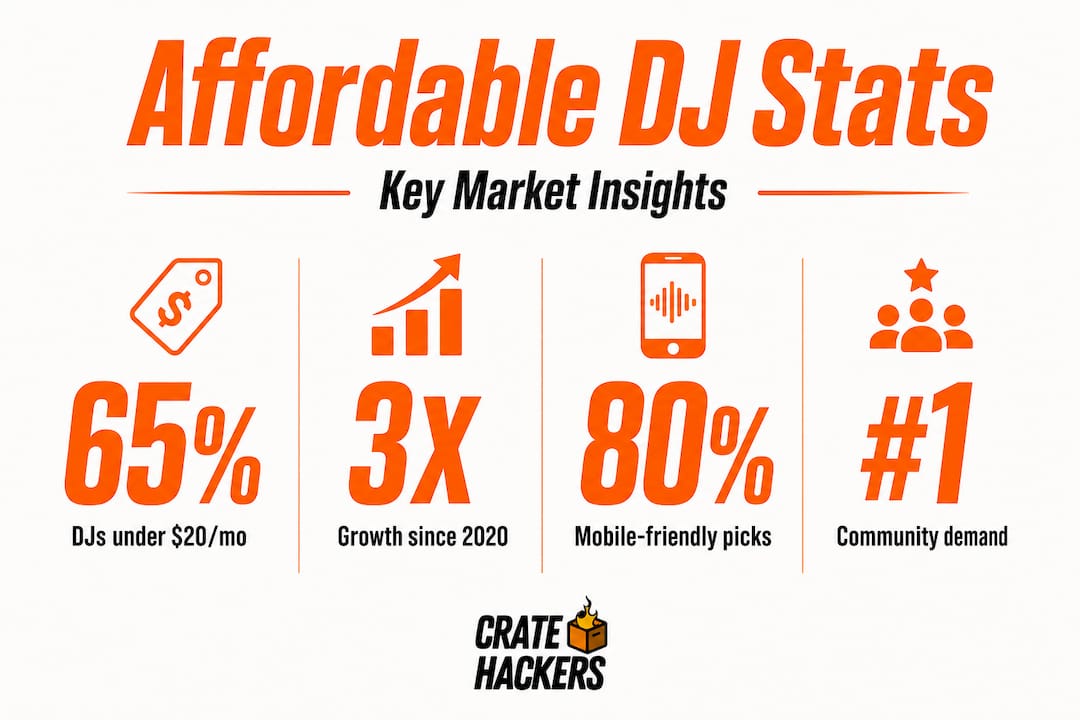
Statistic to know: The DJ software market has seen a measurable shift toward subscription-based tools priced under $20 monthly, with user adoption in the budget and mid-tier segments growing steadily since 2023. Affordable doesn’t mean niche anymore. It’s the new standard.
How to get the most value out of affordable DJ software
Having compared your options, let’s focus on making the most out of whichever affordable DJ software you choose.
The software is only part of the equation. How you use it determines whether it actually delivers. Here’s how to squeeze every bit of value from your tools without spending more:
-
Integrate free add-ons and resources. Many affordable platforms support third-party plugins, community-built templates, or open-source tools that extend functionality for free. Check forums, Reddit communities, and YouTube channels built around your software of choice.
-
Back up your library consistently. This is the one habit that separates prepared DJs from ones who learn hard lessons. Back up your crates, metadata, and tags to an external drive and cloud storage at least once a week. Losing your organized library the night before a gig is a disaster that’s completely preventable.
-
Leverage online communities. DJ forums, Discord servers, and Facebook groups are full of DJs sharing custom crates, troubleshooting tips, and workflow hacks. The collective knowledge in these spaces often outpaces official documentation. Tap into it.
-
Build gig-specific crates in advance. Don’t show up to a wedding with the same library layout you’d use at a club. Use your software to pre-build themed playlists weeks ahead of each gig type. Label them clearly. When the moment comes, you’re already ready.
-
Use your software’s analysis tools before gigs. Most affordable platforms can analyze your tracks for BPM, key, and energy level. Run this analysis on your entire library during downtime, not the night before a gig. Clean metadata now means fast decisions later.
“I switched to a budget-friendly library management setup about two years ago. Honestly, I prep faster than I did when I was paying three times the price. The tools have caught up. Most DJs just haven’t noticed yet.” — Working mobile DJ, 10+ years experience
For DJs of all experience levels, affordable software is not a stepping stone to the real stuff. For many, it is the real stuff. The workflow matters more than the price tag on the app you’re using to build it.
Why affordable DJ software is the future of performance
Here’s an opinion worth sitting with: the era of expensive software as a status symbol in DJ culture is ending. Not fading slowly. Ending.
For years, the assumption was that dropping serious money on software proved you were serious about your craft. That logic made sense when budget options genuinely couldn’t keep up. But that gap has closed dramatically. The affordable tools available today handle the core functions of DJing with a level of reliability that would have cost three times as much five years ago.
What’s driving this shift? Two things: competition and community. The DJ software market is more crowded than ever, which is forcing developers to compete on features and price simultaneously. And the DJ community itself has built a culture of sharing tips, crates, and workflows that makes even budget tools more powerful in practice.
The professionals who figured this out first aren’t hiding it. They’re using lean, efficient setups that cost less, crash less, and integrate more smoothly with their actual workflow. A tool for every DJ doesn’t need a premium price to earn a permanent spot in the DJ booth.
The uncomfortable truth is that clinging to expensive software for credibility is holding some DJs back. It keeps money tied up in tools when that cash could go toward better speakers, more music, or better marketing for your gig business. Efficiency is the real flex in 2026.
Explore the best affordable DJ solutions with Crate Hackers
If you’re ready to stop overpaying and start performing smarter, your next move matters.
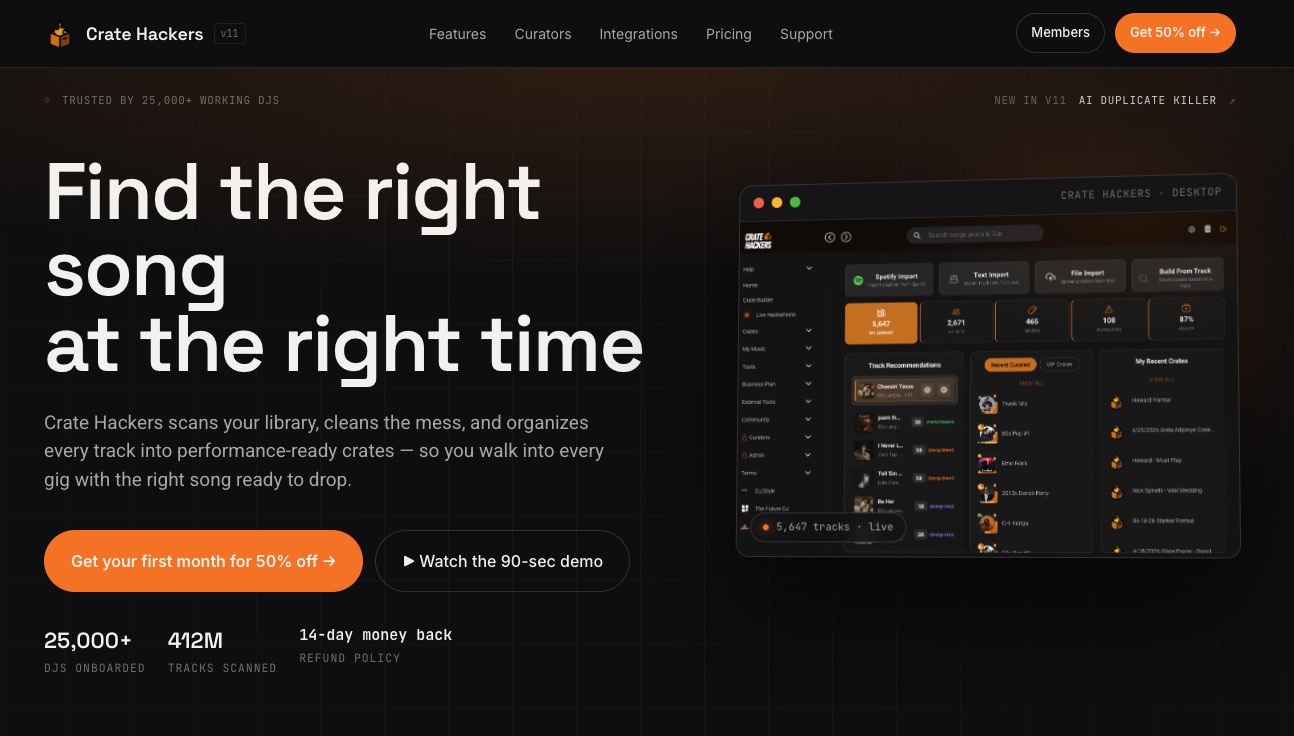
Crate Hackers is built specifically for DJs who want to organize faster, prep smarter, and cut the clutter from their music library without draining their budget. The platform handles automated crate building, duplicate removal, track matching with Spotify and Apple Music playlists, and seamless exporting to your DJ software of choice, including Serato, Virtual DJ, and Rekordbox. Whether you’re managing 1,000 tracks or 100,000, the Crate Hackers main page is your starting point for intelligent, affordable library management built for real gigs and real DJs.
Frequently asked questions
Can affordable DJ software work with popular hardware controllers?
Most affordable DJ software supports a wide range of controllers, but always verify compatibility with your specific model before purchasing. The top affordable DJ software solutions list supported hardware on their official documentation pages, so check there first.
Is affordable DJ software reliable for professional gigs?
Yes, many affordable options are robust enough for club, mobile, and wedding gigs with proper preparation. Affordable solutions serve DJs of all experience levels and have become a trusted choice among working professionals, not just hobbyists.
What limitations should I expect with budget DJ software?
Affordable DJ software may have fewer advanced FX, recording tools, or customization features, but usually offers all the essentials for live mixing. Check the top DJ software options to compare which features are available at which price tiers before making your final call.